Battlefield 6 DLSS, FSR, and Frame Generation Best Settings
Published
On this page
On an NVIDIA RTX card use DLSS Quality; on AMD use FSR Quality; on Intel Arc use XeSS Quality — Battlefield 6 is GPU-heavy on 64-player maps, and Quality upscaling recovers real frames with little clarity loss. Frame Generation is the one to be careful with: it inflates the FPS counter but adds input lag, so it belongs on relaxed big-map play, not competitive infantry fights. This guide sets the right upscaler and mode for both FPS and enemy readability.
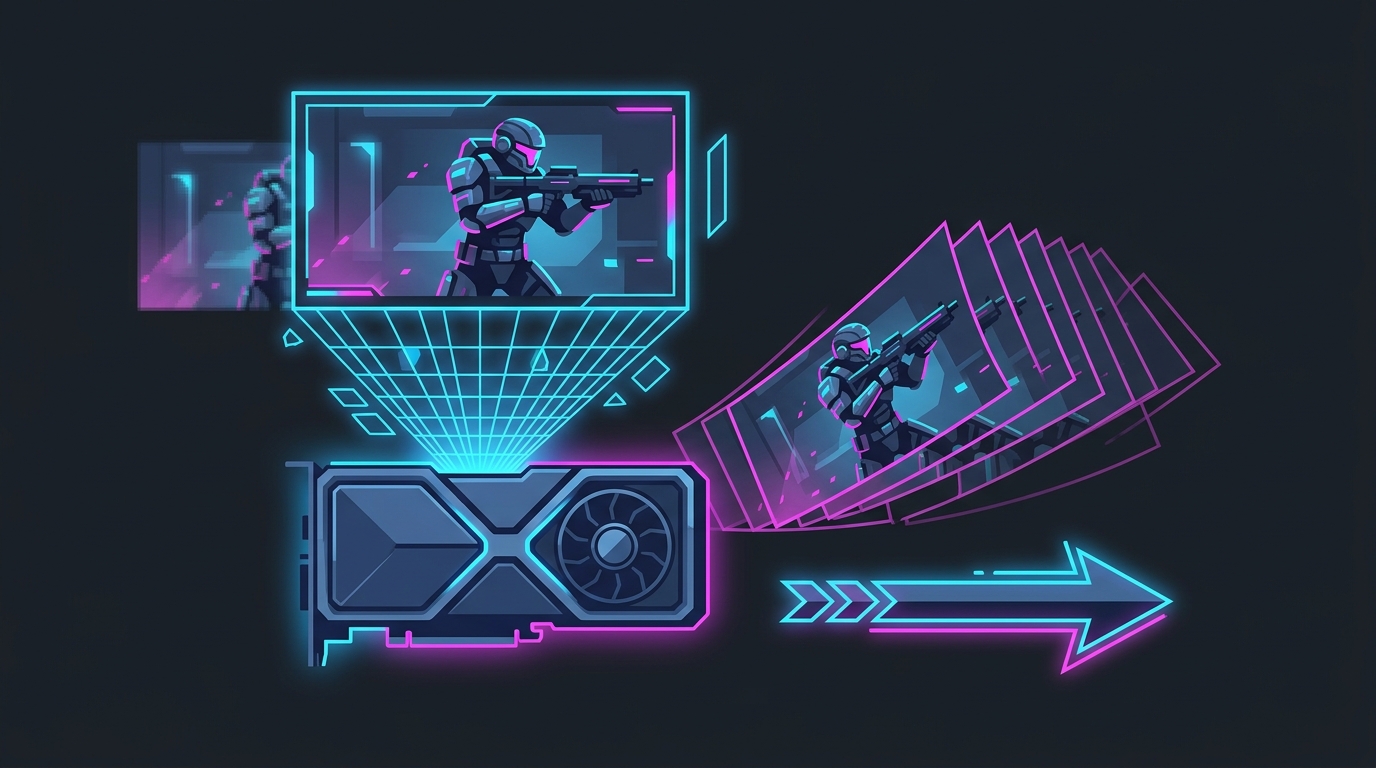
Best Battlefield 6 upscaling settings
Set these in Settings → Video:
| Setting | Competitive recommendation |
|---|---|
| Upscaler | DLSS (RTX) / FSR (AMD) / XeSS (Arc) |
| Upscaler mode | Quality (Balanced only if GPU-limited) |
| Frame Generation | Off for competitive; On for casual big-map smoothness |
| NVIDIA Reflex | Enabled + Boost |
| V-Sync | Off |
Quality mode is the default choice because Battlefield 6’s long sightlines make distant infantry small — you need the sharpest image you can afford. Drop to Balanced only when Quality can’t hold your FPS target in the heaviest destruction moments.
When Frame Generation actually helps (and when it hurts)
Frame Generation inserts AI-generated frames between real ones. In Battlefield 6 the trade-off depends on how you play:
| Scenario | Frame Generation verdict |
|---|---|
| Competitive Breakthrough / close infantry | ❌ Off — added latency hurts snap aim |
| Large Conquest, GPU-limited, mostly ranged | ⚠️ Optional — smoother, if base FPS is 60+ |
| Below ~60 real FPS | ❌ Off — it smears and feels worse |
| High-refresh casual play | ✅ Fine — smoothness over responsiveness |
The FPS counter climbing does not mean the game got more responsive. For the mechanism, see frame generation input lag explained. Get real frames first, then decide if smoothness is worth the latency.
Lower the expensive settings before upscaling harder
The fastest way to stay on the crisp Quality upscaler is to cut the settings that cost the most FPS on large maps:
- Effects Quality → Low and Post-Process Quality → Low — explosions, smoke, and destruction are the biggest drain.
- Shadow Quality → Low, Motion Blur → Off, Ambient Occlusion → Off.
- Texture Quality → High if VRAM allows (helps enemy readability).
Doing this often gets you to target FPS with DLSS still on Quality, so you never fall back to the blurrier Performance mode. The full breakdown is in our best Battlefield 6 settings guide, and if you’re getting hitches, the Battlefield 6 stuttering fix covers shader-comp and traversal stutter separately.
Finish the latency chain
Upscaling is only part of input feel. Pair it with:
- NVIDIA Reflex Enabled + Boost and V-Sync off.
- An FPS cap just below your refresh rate — see how to cap your FPS correctly.
- System-level tuning via the timer resolution pillar and input delay guide.
Related guides
Frequently asked questions
Should I use DLSS or FSR in Battlefield 6?
Use DLSS on an NVIDIA RTX card and FSR on AMD (or Intel XeSS on Arc) — DLSS generally gives the cleanest upscaled image, but the right choice is whichever matches your GPU. Set it to Quality mode first; Battlefield 6 is GPU-heavy on the large 64-player maps, and Quality upscaling recovers meaningful frames with little clarity loss. Only drop to Balanced or Performance if Quality still can't hold your target FPS during vehicle-heavy or destruction-heavy fights.
Should I turn on frame generation in Battlefield 6?
Only if you already have a solid base frame rate (around 60+ real FPS) and you're playing for smoothness rather than competitive edge. Frame Generation raises the FPS counter but adds input latency, which hurts the snappy aim you want in infantry gunfights. On big Conquest maps where you're GPU-limited and mostly at range or in vehicles, it can feel fine; for close-quarters Breakthrough and competitive play, leave it off and chase real frames instead.
Which DLSS mode is best for spotting enemies in Battlefield 6?
DLSS Quality. Battlefield 6's maps are large and enemies are often small and distant, so image clarity directly affects how early you spot them. Quality mode keeps distant infantry sharp while still recovering frames. Performance mode softens the image enough to make far targets harder to read against foliage and smoke, so avoid it unless your GPU genuinely can't hold playable FPS any other way.
Does DLSS reduce input lag in Battlefield 6?
DLSS Super Resolution can lower input lag indirectly by raising your frame rate — more FPS means less time between your input and the next rendered frame. Frame Generation does the opposite and adds latency despite a higher FPS number. Always pair any upscaler with NVIDIA Reflex set to Enabled + Boost, cap your FPS just below your monitor's refresh rate, and turn V-Sync off for the most responsive feel.
What settings should I lower before turning up upscaling in Battlefield 6?
Drop Effects Quality and Post-Process Quality to Low first — explosions, smoke, and destruction stack heavily on large maps and cost the most FPS. Then lower Shadow Quality and turn off Motion Blur and Ambient Occlusion. Keep Texture Quality as high as your VRAM allows for enemy readability. Lowering these expensive settings often gets you to your FPS target with DLSS still on Quality, so you never need the blurrier Performance mode.