NVMe vs SATA SSD for Gaming: Does It Matter?
Published
On this page
Any SSD is a massive upgrade over a hard drive for gaming, but is a fast NVMe drive actually worth it over a cheaper SATA SSD? This guide breaks down where the speed shows up in games and where it doesn’t.
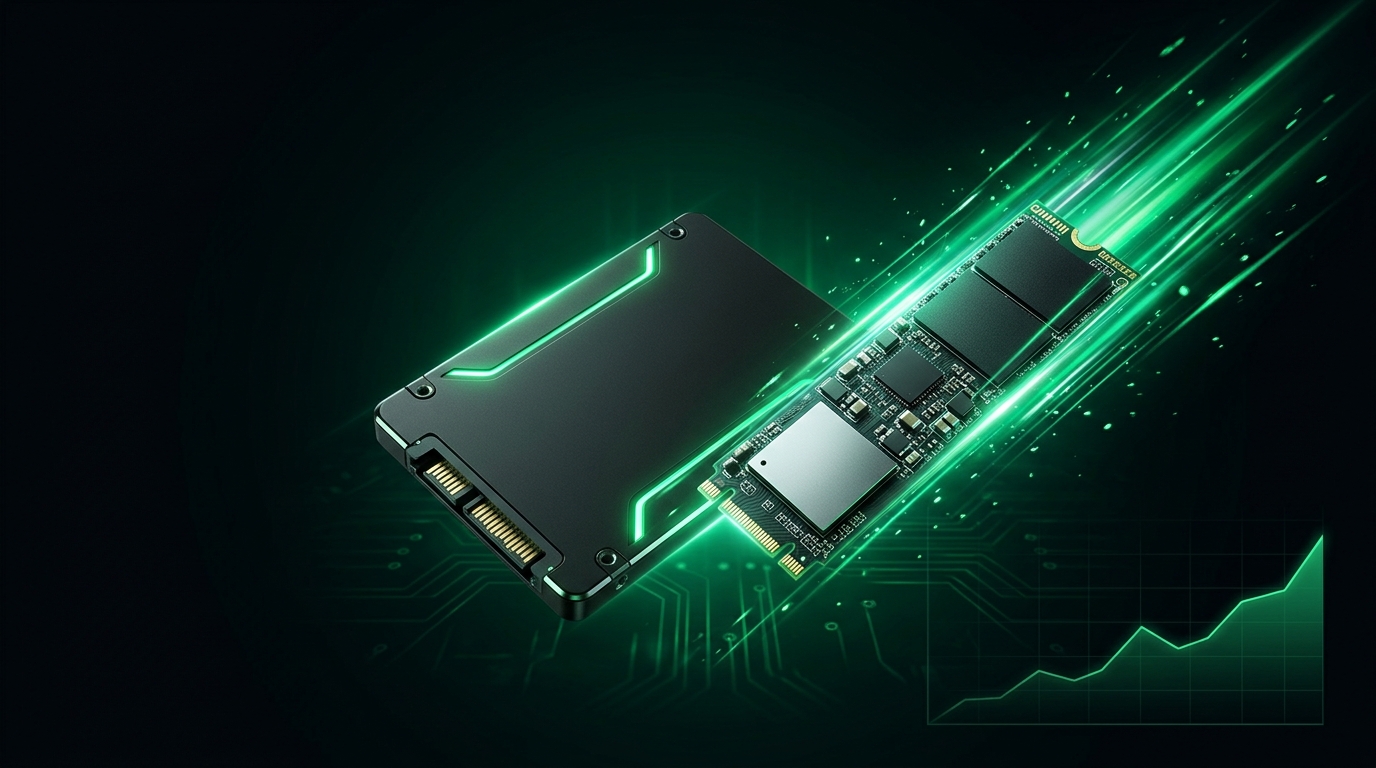
The biggest leap is HDD → SSD. NVMe over SATA is a smaller, more situational gain — but it’s growing as games adopt fast-streaming tech.
The quick comparison
| Drive type | Typical speed | Best for |
|---|---|---|
| Hard drive (HDD) | ~150 MB/s | Avoid for games — causes stutter and long loads |
| SATA SSD | ~550 MB/s | Great value; huge upgrade over HDD |
| NVMe SSD (Gen3) | ~3,500 MB/s | Faster loads, smoother streaming |
| NVMe SSD (Gen4/5) | 7,000+ MB/s | Future-proof, best for streaming-heavy games |
Where you’ll actually notice NVMe
- Open-world traversal stutter: games that stream assets as you move (big maps, UE5 titles) benefit from NVMe’s higher speed.
- Faster load and fast-travel times versus SATA, though the gap is smaller than the spec numbers suggest.
- DirectStorage titles, which can stream and decompress directly to the GPU, lean on fast NVMe.
Where SATA SSD is totally fine
- Esports titles (Valorant, CS2) load fast on any SSD.
- Older or smaller games see little difference between SATA and NVMe.
- As a secondary library drive for games you’re not actively grinding.
What matters more than NVMe vs SATA
- Don’t run games off a hard drive — this is the real fix for load and streaming stutter. See PUBG Stuttering Fix.
- Keep free space — a nearly full SSD streams and writes slower; leave ~10–15% free.
- Pair storage with enough RAM so the system isn’t paging to disk. See how much RAM you need.
What to buy in 2026
- For your main game drive, a Gen4 NVMe is the value sweet spot — fast and affordable.
- A SATA SSD is a fine budget choice and still transforms an HDD-based system.
- Get enough capacity (1 TB+) so you’re not constantly uninstalling games.
Related guides
- How Much RAM Do You Need for Gaming?
- PUBG Stuttering Fix
- Escape from Tarkov Stuttering Fix
- Testing PC Components Using Benchmarking Tools
For gaming, the leap that matters most is getting off a hard drive. NVMe beats SATA for streaming-heavy and DirectStorage games, but a SATA SSD is still excellent value — and free space and RAM matter more than the badge on the drive.
Frequently asked questions
Is NVMe faster than SATA SSD?
Yes. NVMe Gen3 reaches ~3,500 MB/s; Gen4/5 reach 7,000+ MB/s, while SATA maxes around 550 MB/s. However, the practical gaming gap is smaller than the specs suggest.
When does NVMe actually help in games?
Open-world games that stream assets as you move (big maps, UE5 titles), DirectStorage titles, and fast-travel sequences benefit from NVMe's speed. Esports titles (Valorant, CS2) and older games see little difference.
Is SATA SSD good enough for gaming?
Yes. SATA SSD is a massive upgrade over hard drives and totally fine for most games, secondary library drives, and esports titles. The jump from HDD to any SSD matters more than NVMe vs SATA.
What matters more than NVMe vs SATA?
Don't run games off a hard drive (this causes stutter and slow loads), keep 10–15% free space on your SSD, and pair storage with enough RAM to avoid paging to disk.
What storage should I buy in 2026?
For your main game drive, a Gen4 NVMe is the value sweet spot—fast and affordable. SATA SSD is fine for a budget. Prioritize capacity (1TB+) so you're not constantly uninstalling games.