Dead by Daylight Stuttering Fix: Stop Hitching and Frame Drops
Published
On this page
Dead by Daylight stutters for a lot of players — hitching when a killer or survivor first appears, frame-time spikes as perks and powers trigger, and drops during chases even on capable hardware. Most of it comes from Unreal Engine shader compilation, map streaming, and VRAM pressure, not a weak GPU. This guide walks through the fixes that actually smooth it out.
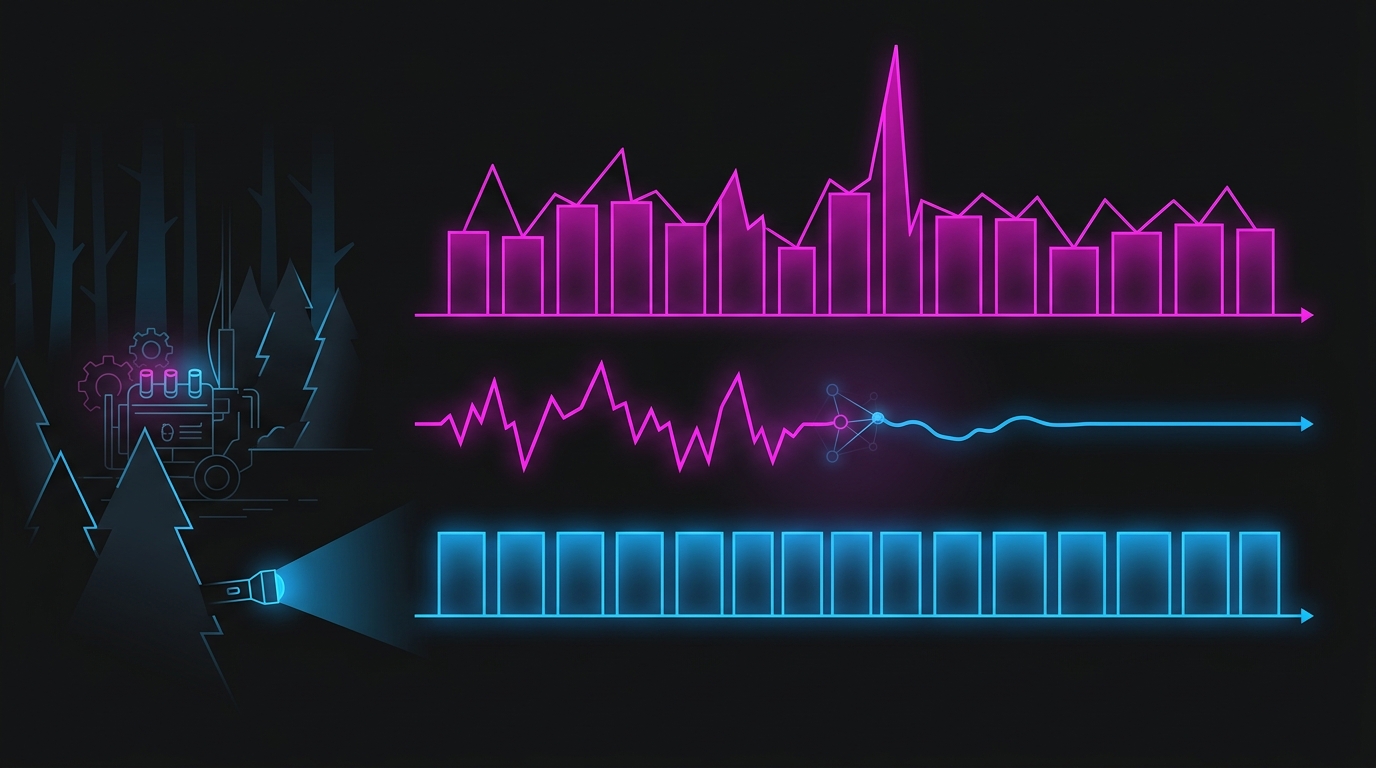
If your FPS counter reads 120 but the game still hitches in a chase, you have a frame-time problem — not a low-FPS problem.
What Dead by Daylight stutter looks like
- brief freezes the first time a killer power, perk, or map effect appears
- hitching at the start of a trial as the map streams in
- stutter that’s worst in the first few trials after a patch or driver update
- VRAM-related hitching on 4–6 GB cards at high texture settings
The goal isn’t a higher number — it’s a flat, consistent frame time with no spikes. Every fix below targets that.
Let shaders compile, then clear the cache after updates
Dead by Daylight compiles shaders as you encounter new killers, maps, and perks, so the first session after any change is always the roughest.
- After a game patch or GPU driver update, play a few trials across different maps and killers first.
- Judge performance on your next session, once common shaders are cached.
- After a driver update, clear the shader cache for a clean rebuild — see Clear Shader Cache to Fix Stuttering.
Install Dead by Daylight on an SSD
Each trial loads a full map and its assets, so drive speed directly affects load times and in-match hitching.
- use an SSD, ideally NVMe
- keep 15–20% free space on that drive
- don’t download, update, or copy large files while playing
Update or clean-install your GPU driver
- Install the latest stable GPU driver — both vendors ship regular fixes.
- If stutter started right after a driver update, roll back to the previous stable version.
- For persistent issues, do a clean install to wipe a corrupted profile — How to Clean Install GPU Drivers with DDU.
- Reset the driver control panel to defaults before layering tweaks.
Lower the settings that cause hitches
Dead by Daylight isn’t GPU-heavy, so raw quality matters less than frame-time stability.
- Keep Textures at a level your VRAM can hold — overflow causes hard hitches on 4–6 GB cards.
- Drop Shadows and Effects a step; they spike frame times in busy chases.
- Turn motion blur off for clearer, more consistent motion.
- Run DirectX 11 if the DX12 build hitches worse on your system — test both.
Close background apps and enable XMP
Dead by Daylight is sensitive to CPU and memory contention, and background overhead shows up as hitches.
- Close browsers, Discord overlays, launchers, and hardware monitors before playing.
- Enable XMP/EXPO so your RAM runs at rated speed.
- 16 GB of system RAM is a realistic minimum; 32 GB gives comfortable headroom.
- On laptops, force the correct discrete GPU for the game.
Cap your FPS for even pacing
An uncapped frame rate swings during chases and causes uneven pacing.
- Cap a few frames below what your PC can reliably sustain — How to Cap Your FPS Correctly.
- Pair the cap with G-SYNC/FreeSync for tear-free, evenly-paced frames — G-SYNC, V-Sync and Reflex Low-Latency Setup.
- Run Fullscreen rather than borderless for the most stable pacing — Fullscreen vs Borderless vs Windowed for Gaming.
Windows fixes worth trying
- Set your power plan to High Performance — Best Power Plan for Gaming.
- Enable Game Mode and disable unnecessary startup apps.
- If you still see periodic hitching, check for lag spikes and background scans.
For steadier frame pacing, a fine timer resolution keeps the scheduler ticking evenly — read The Ultimate Guide to Timer Resolution for Gaming and let Tier1Suite apply it automatically.
Related guides
- Clear Shader Cache to Fix Stuttering
- How to Fix Lag Spikes in Games
- How to Enable XMP or EXPO for Gaming
- How to Cap Your FPS Correctly
- The Ultimate Guide to Timer Resolution for Gaming
Most Dead by Daylight stutter comes from shader compilation, map streaming, and VRAM pressure — not weak hardware. Put the game on an SSD, let shaders build (and clear the cache after driver updates), keep textures inside your VRAM, keep drivers clean, and cap your FPS for even pacing. That clears the worst of the trial hitching.
Frequently asked questions
Why does Dead by Daylight stutter even on a good PC?
Most Dead by Daylight stutter comes from shader compilation and asset streaming in Unreal Engine, not raw GPU power. The first time you see a new killer power, map, or perk effect, the engine compiles its shader, which causes a brief hitch. Loading a new map and streaming its geometry adds more. That's why frame-time spikes happen even on a strong GPU — storage speed, VRAM headroom, and background load matter more than a few extra frames of headroom.
How do I fix Dead by Daylight shader stutter?
Play a few trials across different maps and killers so common shaders compile and cache, then judge performance on your next session. After a GPU driver update or a big game patch, clear your shader cache so it rebuilds cleanly, and keep the latest stable driver installed. Locking your FPS also stops the biggest spikes by keeping frame times even.
Does Dead by Daylight need an SSD?
An SSD is strongly recommended. Dead by Daylight loads a full map and all its assets at the start of each trial, and a hard drive causes long loads plus in-match hitching as textures stream in. Install the game on an SSD — ideally NVMe — with 15 to 20 percent free space, and don't run downloads while playing.
What FPS cap should I use in Dead by Daylight?
Dead by Daylight is capped at 120 FPS by the game, but an uncapped or wildly swinging frame rate still causes uneven pacing. Cap a few frames below what your PC can reliably sustain, or below your monitor's refresh rate with G-SYNC or FreeSync, so frame times stay flat. A steady 100 FPS feels smoother than a jittery 120.
Why does Dead by Daylight stutter when a killer or survivor appears?
That is classic shader-compilation and streaming stutter — the engine loads and compiles the assets for that character, power, or perk the first time it appears in your session. It fades as those shaders cache. A fast SSD, enough VRAM, and closing background apps all reduce how hard each first-encounter hitch lands.